The Best Tested Scotch Eggs
Whether baked or fried, hard boiled or soft boiled, dipped in sauce or on their own, Scotch eggs are an amazing treat. These are perfect as a holiday dinner showstopper, a high-protein addition to a picnic, and everything in between.
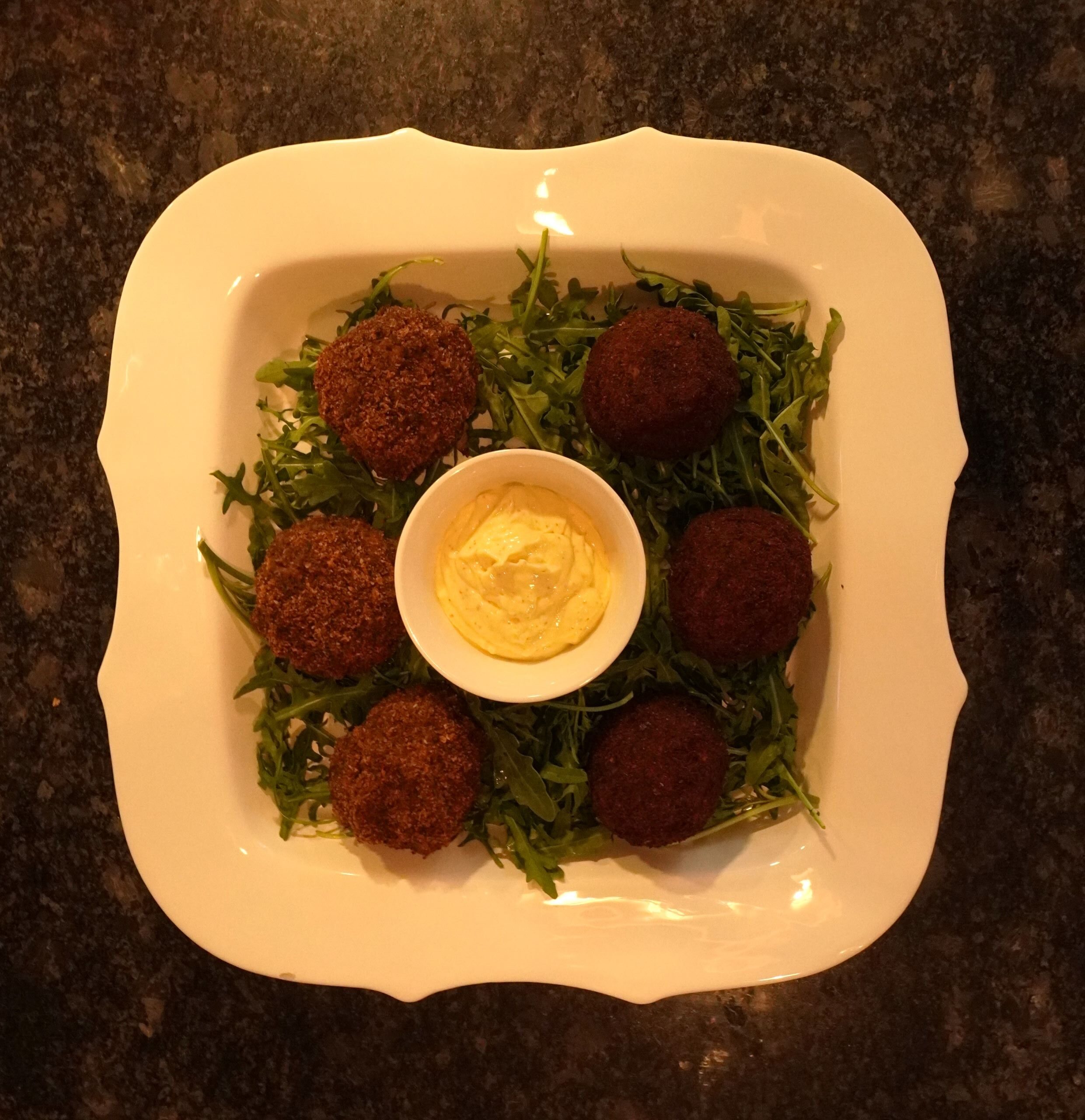
Easter is just around the corner and although Cadbury eggs are delicious, I prefer a more savory option like these Scotch eggs. They’re high in protein and flavor, and when dipped in a homemade horseradish aioli, there’s almost nothing else like it.
There are a lot of different opinions on how to make the best Scotch eggs. Some argue that frying is the traditional cooking method, and there’s no other way to do it. While others say that baking them in the oven is just as good. Some think that a soft boil makes for a superior bite, and others would rather stick with the tried and true hard boil. I have tested 6 different boiling times and 2 different cooking methods, and in this post I break down how each one compares.
The origin of Scotch eggs
Contrary to what the name might imply, Scotch eggs did not originate in Scotland. There are a few theories of how they came to be, but the widely believed origin is in England as a portable snack for hungry travelers back in the 1700s. (source) They have since evolved to be more common place as pub or picnic food, but the recipe has essentially stayed the same with minced meat (usually sausage) wrapped around a boiled egg and deep fried or baked.
What makes this dish so great
Economical: Even with the highest quality of ingredients you can find, this meal is still as simplistic as it gets. It’s a treat to both your taste buds and your wallet.
Delicious: What’s not to love about sausage and egg together? Let alone when it’s breaded and fried. This truly is the holy grail of flavor combinations.
Portable: These can be taken on a picnic in the park on a Saturday afternoon or made ahead on Sunday as meal prep for breakfast throughout the week.
THIS POST CONTAINS AFFILIATE LINKS WHICH MEANS I MAKE A SMALL COMMISSION AT NO EXTRA COST TO YOU. SEE MY FULL DISCLOSURE HERE.
Tools you may need:
Testing to find the best Scotch egg
There are tons of different recipes out there with various boil times with their own fry or bake durations. Some say that you get the same Scotch egg whether you bake it or fry it. I wanted to know if either cooking method really did produce the same end result and if soft boiled could be achieved in the oven.
Boil the eggs
First I started with six different boil times – three for baking and three for frying. In an effort to maintain even a bit of a jammy egg at the end of baking, I started with an extremely soft boil of four minutes with a five and six minute boiled egg as the other two options. For frying, I did six, six and a half, and seven minute boiled eggs.

Once they were boiled, I put them in ice water to stop the cooking, and, once completely cooled, I peeled each one. As you might imagine, the four and five minute boiled eggs were extremely hard to handle, but I was successful in peeling off the shell without breaking the white.
Pro-tip: Before dredging, completely dry each egg with a towel. The sausage will stick much better to a dry egg.
Set up dredge
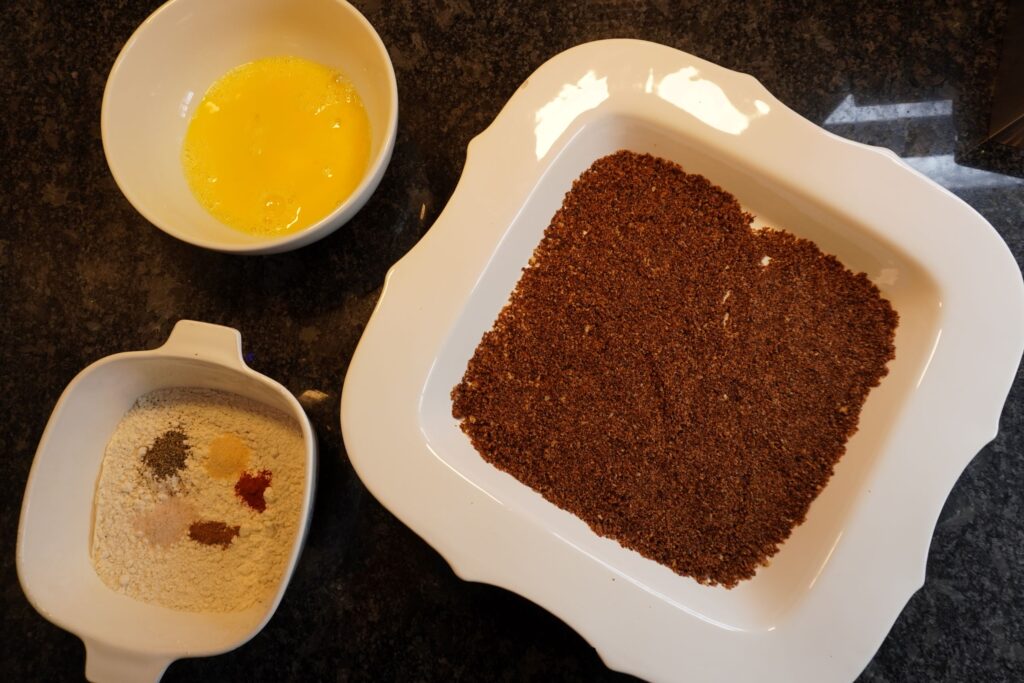
After peeling, I set up the dredging station with all purpose flour seasoned with a teaspoon each of garlic powder, salt, and pepper along with a half teaspoon of nutmeg and paprika, two eggs whisked together with a tablespoon of water, and about a cup and a half of finely ground, seasoned sourdough breadcrumbs.
Encase with sausage
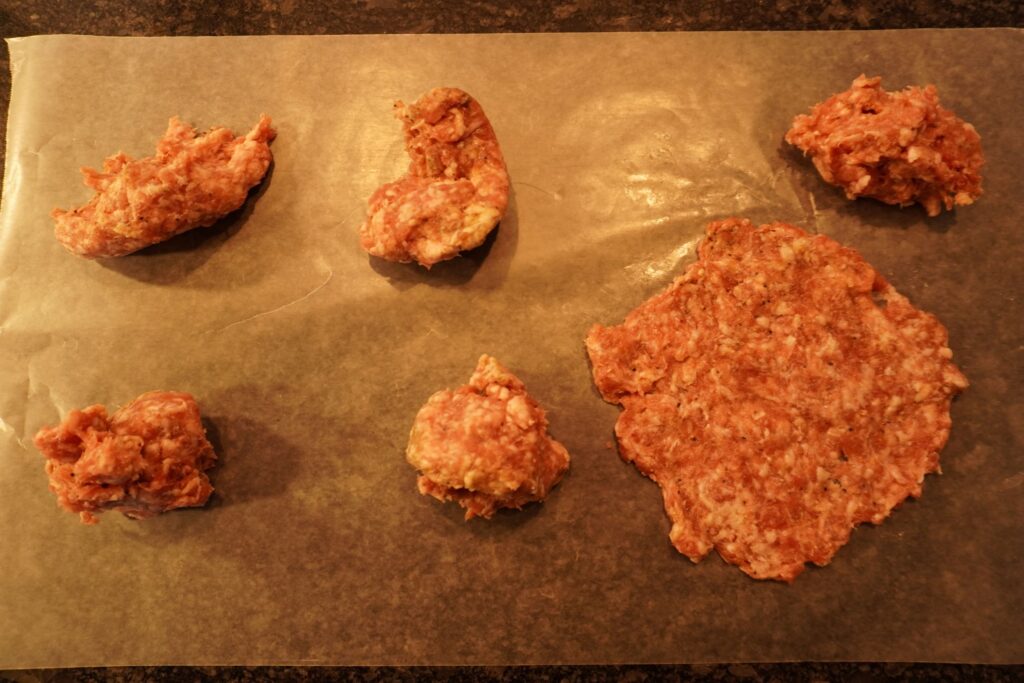
I weighed my sausage in grams on a food scale and divided the total by 6. It came out to around 90 grams per serving, but you can do your own math. I laid out a sheet of wax paper, and placed each portioned piece of sausage down with enough room to flatten each to hold an egg.

Start by rolling each egg in flour before encasing in sausage to ensure it sticks well. Place the egg in the middle of the flattened sausage and roll around in your palm using your other hand to enclose the sausage completely. Make sure not to leave any open areas in the sausage where you can see the white of the egg underneath.
Pro-tip: When handling the sausage, keep a bowl filled with a bit of water. This helps to keep the meat from sticking to your hands when forming into a ball around the egg.
If you prefer to cook in your oven or you don’t have a Dutch oven to fry in, start with a 6 minute boiled egg. Place the sausage wrapped eggs onto a parchment lined sheet pan and bake at 350F for 35 minutes until your sausage has fully cooked.
Prepare to fry

Heat up your fat of choice to around 350F degrees. I prefer to use lard, tallow, or avocado oil for frying because I avoid seed oils in my cooking, and I will always encourage my readers to do the same. This recipe is not quite a deep fry but also not quite a shallow fry. Most of the egg is under the frying fat, but it still requires constant attention and turning the egg over a few times to get a solid cook and browning. You’ll need about 3 cups of whatever fat you choose.

Fry three eggs at a time for six minutes. Constantly manage the heat of the frying fat to stay as close to 350F as possible, and turn each egg every minute or so to ensure an even cook on the sausage. When finished, transfer to a paper towel-lined plate to drain.
The final results
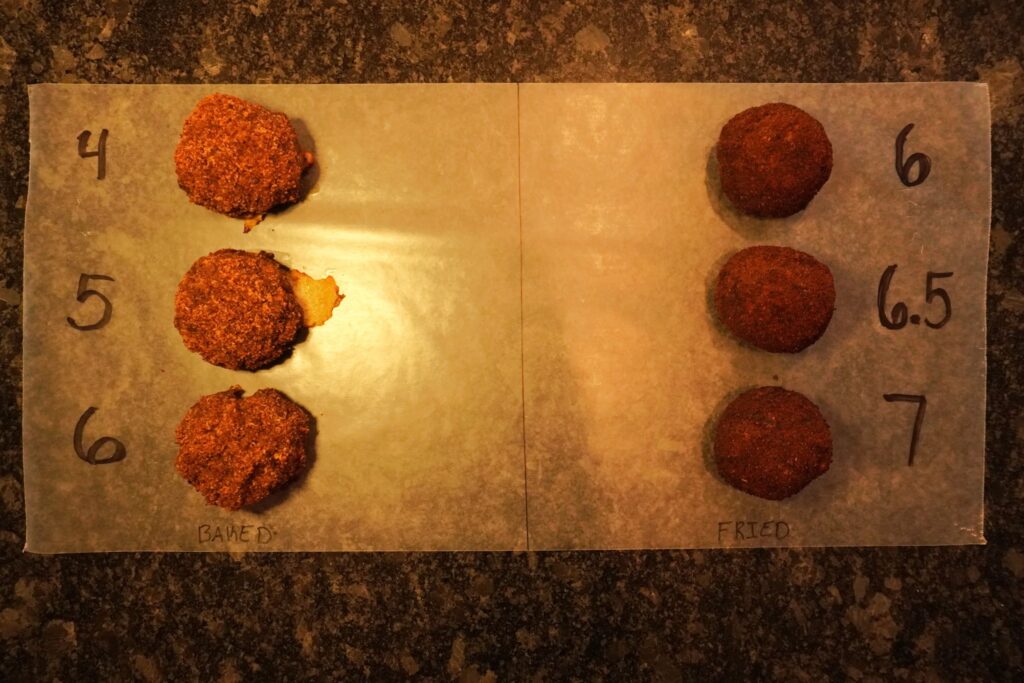
After half of the eggs were baked for 35 minutes in a 350F oven and the other half were fried for six minutes in a 350F Dutch oven, it was time to compare the two different cook methods and the six different boiling times.
Baked
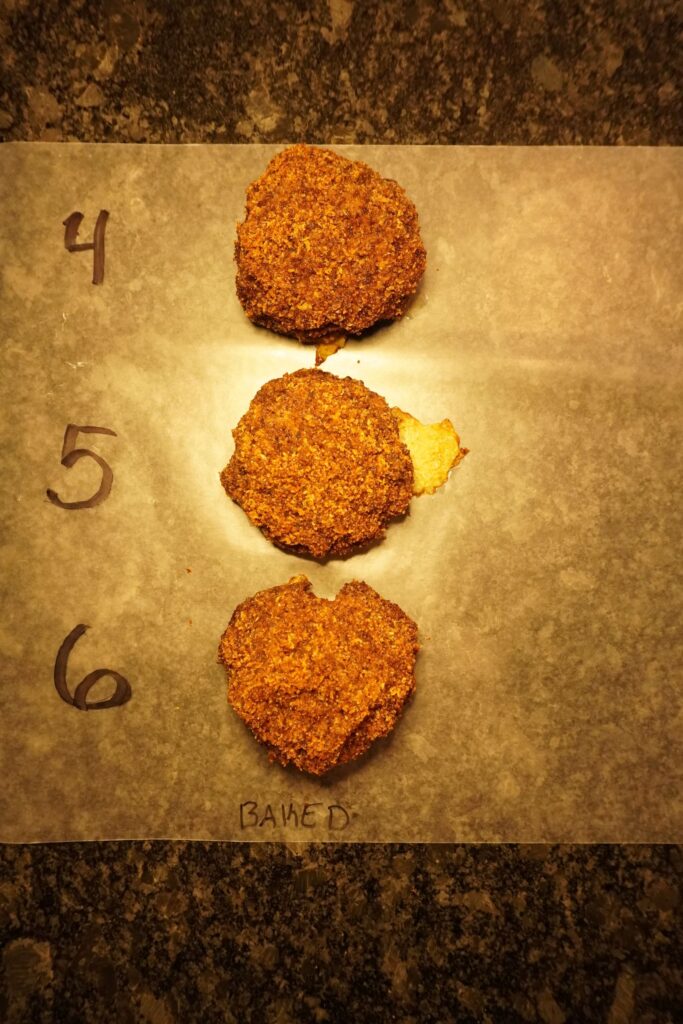

The shape, color, and crisp of the baked eggs were vastly different than the fried. The yolks also were all hardened in the baking process. Boiling for less time did nothing to ensure a more jammy texture in the final product.
Pros:
This baking method does not require a frying set up. If cooking with hot oil intimidates you or you don’t have the equipment, this is the route to take.
Some argue that it’s healthier to bake rather than fry.
There’s less clean up involved.
Cons:
It loses its shape and its crispiness in the oven as it sits on the pan in its own rendered fat throughout the baking process.
The yolk will always be hard no matter how soft boiled it is from the start.
The sausage wanted to separate from the egg more so when baked.
Fried
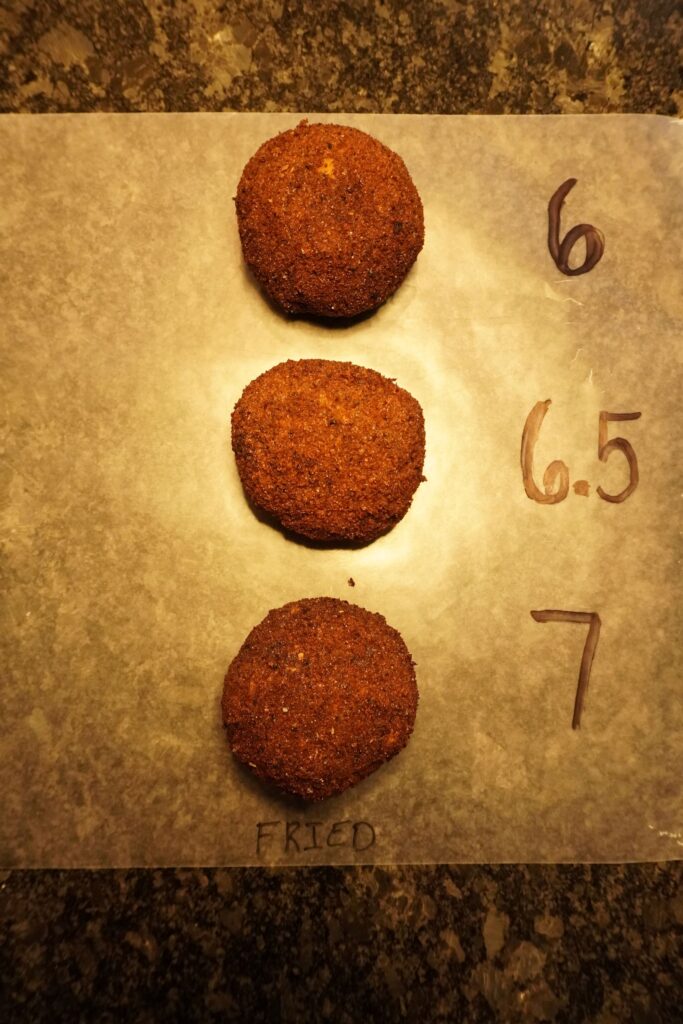

Frying is the traditional method of cooking Scotch eggs, and the reason for that is clear. The final result is a near perfectly round sausage encased egg with a crispy breadcrumb exterior and a molten yolk interior. There were clear differences between the eggs depending on how long they had been boiled in the beginning. Both the six and six and a half minute boiled eggs had a more runny yolk with an egg white that wasn’t fully set after frying. The clear winner here was the seven minute boil that had a completely set white and a perfectly soft yolk inside.
Pros:
The structural integrity of the Scotch egg is maintained with frying. It can easily be held and eaten without falling apart.
The textures of both the outside and the inside are more reminiscent of what you expect out of a traditional Scotch egg.
Frying is a quicker cooking method if you are trying to have these on the table sooner than later.
Cons:
Frying on the stove top is messy and can be dangerous if not constantly managed and monitored.
This method requires having an extra ingredient (frying fat) to use for cooking.
Cleaning up the frying oil is an extra step at the end. Fry Away is a product that helps solidify cooking oil after it’s been used making clean up easier.
The final verdict

Both cooking methods produce their own version of this delicious, savory treat. The choice is up to you depending on what you have available to cook with, the time you have to do it, and your preference on texture of the exterior and interior. Either way you will end up with an egg wrapped in sausage. You really can’t go wrong with that combination especially if you have a homemade horseradish aioli to use for dipping…
The homemade aioli
A Scotch egg is indulgent on its own, but when paired with a homemade horseradish aioli, it’s elevated beyond compare. This sauce has only a few simple ingredients that you can throw together in a jar. Blend it with an immersion blender, and suddenly you have the most delicious dipping aioli to serve.
Gather your ingredients, and put them into a mason jar adding the oil last so that it sits on the top.

Blend them up starting at the bottom and slowly working your way to the top to evenly incorporate all of the oil.

And just like that, you have a flavorful, homemade dipping sauce to enjoy with the best Scotch eggs!

The Best Tested Scotch Eggs
These Scotch eggs are the perfect soft boil with a crunchy fried exterior which makes them the best indulgent savory treat great for any occasion.
Ingredients
- 6 eggs
- 1.5 pounds of breakfast sausage
- 3 cups of frying fat (lard, tallow, avocado oil)
Dredging Station
- 1 cup all purpose flour
- 1 tsp garlic powder
- 1 tsp salt
- 1 tsp pepper
- .5 tsp nutmeg
- .5 tsp paprika
- 2 eggs
- 1 tbsp water
- 1.5 cup finely ground, seasoned sourdough breadcrumbs
Horseradish Aioli
- 1 cup avocado oil
- .5 tsp salt
- 2 tbsp fresh lemon juice
- 1 egg
- 1 garlic clove
- 1 tbsp prepared horseradish
- 2 tbsp mustard
Instructions
- Boil eggs
- Fill a pot with water and bring to a boil
- Gently place eggs into water.
- Boil for 7 minutes.
- While eggs are boiling, fill a bowl with ice water.
- Once boiled, transfer eggs to ice water, and allow to cool completely.
- Peel eggs
- After they have cooled, slowly peel eggs as to be cautious to maintain the integrity of the egg white as much as possible.
- Dry eggs on a towel and set aside.
- Prepare sausage
- Divide into 6 equal portions on a sheet of wax paper.
- Using your finger tips, flatten the sausage portions into quarter inch thick rounds.
- Wrap eggs
- Roll eggs in flour before placing onto flattened sausage.
- Using a bowl of water to keep your hands from sticking, gently form the sausage around the egg.
- Close all open areas to ensure there are no spots where the egg is peeking through the sausage.
- Dredge
- Combine the flour and all the seasonings.
- Whisk the eggs with the tablespoon of water.
- Pour the breadcrumbs in a large bowl or plate. Here's a recipe for sourdough breadcrumbs.
- For a classic breading, start by rolling the Scotch egg in the seasoned flour.
- Next roll in the egg wash being sure to leave no dry bits of flour.
- Lastly, roll in the breadcrumbs to completely coat the exterior.
- Fry
- Heat frying fat to 350F degrees.
- Place no more than 3 Scotch eggs into the fat at a time.
- Constantly manage heat to remain around 350F.
- Turn each egg over about every minute to achieve an even cook.
- Pull out of the fry after 6 minutes onto a paper towel-lined plate to drain for about 10 minutes.
- Make aioli
- Combine all ingredients in a mason jar pouring the oil in last.
- Blend with an immersion blender starting at the bottom and slowly working your way to the top.
- Serve
- Plate Scotch eggs on a bed of arugula with the homemade aioli in the center.
- Can be enjoyed while still warm or later after they've cooled.
Notes
If you prefer to bake, place in the oven on a parchment lined sheet pan for 35 minutes at 350F. See more details above the recipe card, and be sure that you are okay with no soft boil as the oven bakes the egg all the way through every time.
These stay fresh kept in an air tight container in the refrigerator for 3-4 days if you don't eat them all immediately.
Store any leftover aioli in the fridge for up to one week.
Nutrition Information:
Yield:
6Serving Size:
1 Scotch eggAmount Per Serving: Calories: 270Total Fat: 16.6gCarbohydrates: 17gFiber: 3gProtein: 12.2g
Nutrition information is estimated.